


You wake up tired even after a full eight hours of sleep. Your workouts feel heavier than they used to. Your mood has been flat for weeks, and your motivation to do much about it is somewhere near zero. A lot of men in their 30s quietly accept this as normal aging and move on. But what if it is not just age? What if your hormones are telling you something worth listening to?
This article breaks down what actually happens to testosterone as men get older, what the warning signs look like, and most importantly, what you can do about it without immediately reaching for a prescription.
What Happens to Testosterone After 30?
Testosterone is the primary male sex hormone. It plays a direct role in building and maintaining muscle, keeping bone density healthy, regulating mood and mental sharpness, and driving sexual health. The problem is that the body does not keep producing it at peak levels indefinitely.
The Cleveland Clinic reports that testosterone in men declines at a rate of roughly 1% per year starting in the late 30s, and this is widely considered a standard part of male aging. Research from MedlinePlus confirms the process can begin as early as age 30 to 40 in some men, and for many of those men, the effects are not noticeable.
The scale of the issue is larger than most men expect. Data from Total Care Family Center indicates that approximately one in four men over the age of 30 has low testosterone. Research cited by UT Southwestern Medical Center found that around 35% of men in their 70s meet the clinical criteria for low-T. What is particularly notable is that doctors are now seeing men in their 20s presenting with similar complaints, which suggests this is not purely an aging issue.
Recognizing the Symptoms of Low Testosterone in Men Over 30
The tricky part about hormonal decline is how gradually it happens. There is rarely a single dramatic moment where you notice something is wrong. Instead, the signs accumulate slowly and are easy to attribute to stress, a bad week, or simply being busy.
Here is what to keep an eye on:
| Category | Common Symptoms |
| Physical | Loss of muscle mass, increased belly fat, ongoing fatigue, thinning hair |
| Sexual | Reduced sex drive, erectile dysfunction, lower semen volume |
| Mental and Emotional | Brain fog, difficulty concentrating, low mood, irritability, anxiety |
| Metabolic | Unexplained weight gain, slow recovery after exercise, insulin sensitivity issues |
Total Care Family Center reports that around 70% of men with clinically confirmed low testosterone experience erectile dysfunction, and roughly 63% notice a significant reduction in libido. These are not just bedroom concerns. They affect confidence, relationships, and day-to-day quality of life in ways that accumulate over time.
The Urology Care Foundation adds that men with diabetes are disproportionately affected, with 24.5% of diabetic men showing low testosterone compared to 12.6% of non-diabetic men. Body weight is also a major factor. Research found that 30% of overweight men had low testosterone, compared to just 6.4% of men with a healthy body weight.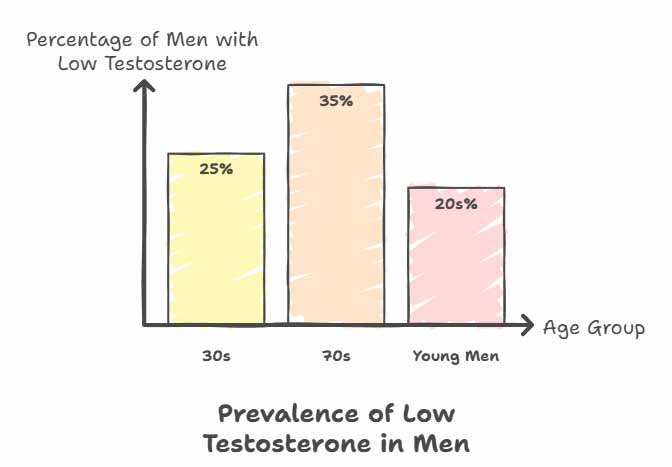
When Should You Get Tested?
If several of these symptoms feel familiar, a conversation with your doctor is a worthwhile starting point. Diagnosis is not complicated. It requires a blood test, ideally taken in the morning when testosterone levels tend to be at their highest point of the day. A total testosterone reading below 300 ng/dL is the threshold most clinicians use to define low levels, and it typically calls for further evaluation.
Why Testosterone Levels Drop in the First Place
Before working on solutions, it helps to understand what is driving the decline. In most men, it comes down to a mix of factors rather than a single cause.
- Aging: Over time, the specialized cells inside the testes that produce testosterone gradually lose efficiency. This is a natural biological process that begins in the 30s.
- Excess body weight: Fat tissue, particularly around the abdomen, contains an enzyme that converts testosterone into estrogen. The European Male Aging Study found that men with a BMI above 30 had testosterone readings approximately 5 nmol/L lower than men who maintained a healthy weight.
- Chronic stress: When stress becomes a permanent background state, the body maintains elevated cortisol levels. Cortisol and testosterone have a direct biochemical conflict, meaning high cortisol tends to suppress testosterone production.
- Poor sleep: This one is covered in more detail further down, but sleep loss is one of the fastest and most measurable ways to lower your testosterone levels.
- Physical inactivity: A sedentary lifestyle is consistently linked to reduced hormone output across multiple large studies.
- Alcohol consumption: Research cited by Healthline shows that testosterone can begin dropping within 30 minutes of consuming alcohol, and long-term heavy drinking is tied to lasting damage to testicular function.
- Medical conditions and medications: Mayo Clinic notes that conditions like obstructive sleep apnea and thyroid disorders can interfere with testosterone production, and certain medications including opioids and some antidepressants have the same effect.
Natural Ways to Increase Testosterone After 30
This is the practical part. Before considering medical interventions, there are evidence-backed lifestyle changes that can produce real hormonal improvements, particularly if your levels are borderline or your symptoms are in the early stages.
1. Prioritise Strength Training
Physical exercise is one of the most reliably proven ways to support testosterone production. Research showing that structured resistance training programs produced significant improvements in free testosterone levels among previously sedentary men. High-intensity interval training has shown similar results.
Exercises like squats, deadlifts, bench presses, and rows tend to produce the strongest hormonal response per session.
Worth noting is that too much endurance-focused exercise without adequate recovery can elevate cortisol, which works against testosterone. Balance between training and rest is important.
2. Sleep Is Not Optional for Hormone Health
Sleep is possibly the most underestimated factor in testosterone management, and the research behind it is hard to ignore.
A 2011 study published in JAMA, cited by Nebraska Urology, tracked healthy young men who were restricted to five hours of sleep per night for one week. Their daytime testosterone levels dropped by 10 to 15% in that timeframe alone. That is a substantial hormonal decline caused by nothing other than reduced sleep.
A few simple steps to protect sleep quality:
- Maintain a consistent 6-8 hour sleep and wake schedule throughout the week
- Reduce screen time in the hour before bed to support melatonin production
- Keep your sleeping area cool, dark, and free from noise where possible
- If you frequently wake up tired or your partner mentions snoring, get assessed for sleep apnea, as it is a known disruptor of testosterone levels
3. Choose Foods That Support Hormone Production
The body needs specific nutrients as raw materials for testosterone synthesis. A diet that consistently falls short of those nutrients leaves the hormonal system without what it needs to function properly.
Here are some of the best foods that increase testosterone naturally:
| Food | Key Nutrient | Why It Matters |
| Oysters, beef, pumpkin seeds | Zinc | Essential for testosterone synthesis and LH signaling |
| Salmon, tuna, egg yolks | Vitamin D | Plays a direct role in hormone production |
| Spinach, almonds, dark chocolate | Magnesium | Supports free testosterone and reduces oxidative damage |
| Olive oil, avocados, walnuts | Healthy fats | Core building blocks for steroid hormone production |
| Pomegranate | Antioxidants | Shown in studies to lower cortisol and support testosterone |
| Onions and garlic | Flavonoids | Stimulate the hormones that trigger testosterone release |
A Mediterranean-style eating pattern built around vegetables, lean proteins, whole grains, and unsaturated fats is widely recommended in the context of hormonal health.
Reducing ultra-processed junk foods and foods high in added sugar is equally important. These increase weight gain, chronic inflammation, and blood sugar instability, all of these factors gradually contribute to lowering testosterone levels over time.
4. Pay Attention to Zinc and Magnesium
Two minerals come up repeatedly in testosterone-related research, and most men are not getting enough of either.
Zinc is involved in the production of luteinizing hormone, which is the chemical messenger that triggers the testes to produce testosterone. Research found a clear link between zinc deficiency and lower testosterone, and supplementation in men who were deficient led to measurable increases in both total and free testosterone levels.
Magnesium, particularly when combined with regular exercise, has also been shown to support testosterone production. Experts suggest this happens partly through its role in reducing oxidative stress and protecting the hormone-producing cells inside the testes.
If your regular diet includes leafy greens, seeds, and quality protein, you may already be meeting your requirements. If your eating habits are less consistent, a targeted supplement taken with medical guidance may be worth considering.
9 Foods That Increase Male Testosterone in 2025-26
5. Managing Stress Is Part of the Equation
Sustained psychological stress keeps cortisol elevated for extended periods, and cortisol and testosterone operate in biological opposition. When one rises, the other tends to fall.
Practical approaches to stress reduction include:
- Regular moderate exercise, which also improves sleep and creates a positive feedback loop
- Regular yoga practice with breathing exercises
- Time spent outdoors in natural settings
- Maintaining meaningful social connections and protecting genuine rest time
- Professional support through therapy if anxiety or depression has become a persistent issue
UT Southwestern’s urology team has observed that a significant number of men who present with symptoms of low testosterone are actually dealing with anxiety or depression as the core issue. Addressing those conditions through therapy or counseling alone has resolved hormonal concerns for many of these patients without any medical testosterone treatment.
6. Watch Alcohol Intake and Limit Toxin Exposure
Regular alcohol consumption does not need to reach heavy levels to affect hormones. Clincal studies note that just five consecutive days of drinking is enough to begin impacting testosterone levels. Alcohol disrupts the hormonal feedback system at several points in the body simultaneously.
Environmental toxins are another area worth taking seriously. Harvard Health highlights BPA, a chemical compound present in some plastic bottles, food packaging, and can linings, as a known endocrine disruptor. Exposure has been linked to lower testosterone and reduced sperm count in research studies. Choosing BPA-free containers and reducing reliance on processed foods in plastic packaging is a low-effort step with practical hormonal benefits.
A Note on the Best Natural Testosterone Boosters
The supplement market around testosterone is enormous and often misleading. That said, some options do carry genuine research support.
Vitamin D, zinc, magnesium, and ashwagandha all have scientific evidence behind them, particularly in men who are already deficient in those nutrients. GoodRx also references fenugreek and DHEA as frequently discussed options, though the quality and consistency of evidence varies between them.
However, UT Southwestern offers an important caution. None of these products are approved or regulated by the FDA, which means there is no reliable way to verify their contents or confirm their safety purely from the label. Some over-the-counter testosterone products have been associated with side effects including erectile dysfunction and kidney problems.
The more practical path is to get your actual hormone levels tested, identify any real deficiencies, and use supplementation in a targeted and informed way with a healthcare professional guiding the process.
Our Recommended Pick: Testosil
If you want a natural testosterone supplement that actually backs its claims with science, Testosil stands out from the crowd. Its formula is built around KSM-66 Ashwagandha, the world’s most clinically studied ashwagandha extract, supported by over 24 double-blind studies.
On top of that, it combines ten additional proven ingredients including Zinc, Magnesium, Vitamin D3, Fenugreek, and D-Aspartic Acid, all at research-backed doses. It is third-party tested, manufactured in FDA-registered facilities, and comes with a lifetime money-back guarantee so there is genuinely zero risk in trying it. For men over 30 serious about supporting their hormone health naturally, this one is worth your attention. Check it out at testosil official website.

Summary Table: What Works and Why
| Strategy | How It Supports Testosterone | What to Realistically Expect |
| Resistance and HIIT training | Directly stimulates testosterone production | Gradual improvement over weeks and months |
| 7 to 9 hours of quality sleep | Most testosterone is produced during REM sleep | Prevents the 10 to 15% drop linked to sleep deprivation |
| Zinc and magnesium through food or supplements | Supports LH production and testosterone synthesis | Most impactful for men with confirmed deficiencies |
| Reducing chronic stress | Lowers cortisol, which suppresses testosterone | Allows natural production to stabilize and recover |
| Reaching and maintaining a healthy weight | Reduces fat-driven estrogen conversion | Research shows up to 30% improvement in some cases |
| Cutting back on alcohol | Reduces hormonal disruption | Measurable effects can appear within days |
| Vitamin D through sunlight or supplementation | Directly linked to hormone production | Most beneficial in men who test as deficient |
Proven Ways to Last Longer Without Coming
Closing Thoughts
A drop in testosterone after 30 is a real biological process, but it is not something you have to accept as unchangeable. The body responds well to consistent, evidence-grounded lifestyle choices. Improving your sleep, adding regular strength training, eating in a way that supports hormone health, and keeping chronic stress in check are all changes that move your levels in the right direction and carry benefits well beyond just hormones.
If your symptoms are significant or have been going on for a while, get your levels checked before drawing any conclusions. A blood test gives you actual data rather than guesswork, and a doctor can help you figure out whether lifestyle adjustments are enough or whether additional medical support makes sense.
Your 30s do not have to be a slow decline. With the right habits in place, they can be among your strongest years.